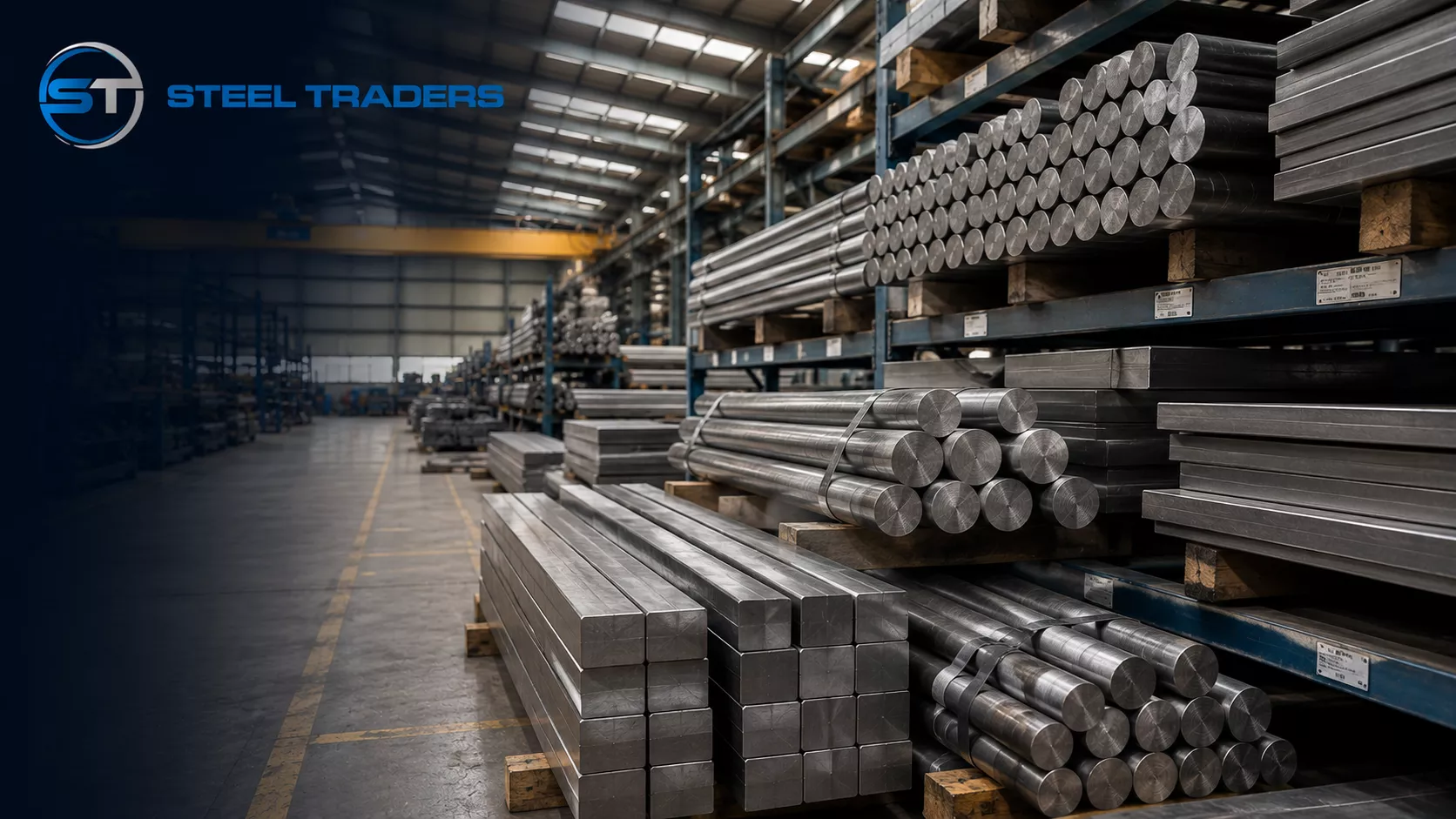
Selecting the correct engineering bar is one of the most important decisions in any manufacturing, machining or fabrication project.
The wrong choice can increase machining times, reduce product performance, create unnecessary costs and even compromise the lifespan of a finished component.
Engineering bars are available in a variety of grades, sizes and profiles, each designed to deliver specific mechanical properties and performance characteristics. Understanding the differences can help ensure your project achieves the best possible outcome.
In this guide, we explain the most common engineering bar profiles, typical material grades and how to determine which option is best suited to your application.
What Are Engineering Bars?
Engineering bars are solid steel products manufactured to precise dimensions and material specifications.
They are commonly used in:
- Precision machining
- Component manufacturing
- Automotive applications
- Agricultural equipment
- Construction machinery
- Industrial engineering
- General fabrication
Unlike structural steel products, engineering bars are often selected for their machinability, strength, toughness and dimensional accuracy.
Common Engineering Bar Profiles
Engineering bars are available in several different shapes, each offering advantages depending on the intended application.
Round Bar
Round bar is one of the most widely used engineering products and is often the first choice for machined components.
Typical Applications
- Shafts
- Pins
- Rollers
- Bearings
- Fasteners
- Hydraulic components
Benefits
✔ Excellent machinability
✔ Ideal for turning operations
✔ Available in a wide range of diameters
✔ Suitable for heat treatment and further processing
Round bars are commonly specified where rotational symmetry or precision machining is required.
Square Bar
Square bars provide excellent strength and are often used where flat surfaces are beneficial during fabrication.
Typical Applications
- Tooling
- Gates and railings
- Structural supports
- Agricultural equipment
- Engineering components
Benefits
✔ Strong and durable
✔ Easy to fabricate
✔ Suitable for welding and machining
✔ Consistent dimensional accuracy
Square bars are frequently selected for projects requiring both strength and versatility.
Flat Bar
Flat bars are among the most versatile engineering products available and are used across multiple industries.
Typical Applications
- Brackets
- Base plates
- Frameworks
- Support structures
- General fabrication
Benefits
✔ Easy to cut and process
✔ Excellent fabrication flexibility
✔ Cost-effective solution
✔ Wide availability
Flat bars are often chosen where simplicity, strength and ease of fabrication are priorities.
Rectangular Bar
Rectangular bars offer similar benefits to flat bars while providing additional depth and structural strength.
Typical Applications
- Machine components
- Tool manufacture
- Engineering fabrications
- Industrial equipment
Benefits
✔ Greater strength than standard flat bar
✔ Suitable for precision machining
✔ Excellent structural performance
Choosing the Right Grade
The profile is only part of the decision.
Material grade often has a greater impact on performance than shape alone.
Mild Steel Grades
Mild steel remains one of the most commonly specified engineering materials.
Best suited for:
- General engineering
- Fabrication
- Welded structures
- Cost-sensitive projects
Benefits include:
✔ Good weldability
✔ Easy machining
✔ Cost-effective procurement
✔ Wide availability
Carbon Steel Grades
Carbon steels provide higher strength and wear resistance than standard mild steel.
Typical applications include:
- Mechanical components
- Shafts
- Gears
- High-load applications
Benefits include:
✔ Improved strength
✔ Better wear resistance
✔ Suitable for heat treatment
Alloy Steel Grades
Alloy steels are used where performance requirements are significantly higher.
Typical applications include:
- Aerospace components
- Automotive engineering
- Heavy machinery
- Precision manufacturing
Benefits include:
✔ Exceptional strength
✔ Enhanced toughness
✔ Improved fatigue resistance
✔ Superior durability
Key Questions to Ask Before Ordering
Before selecting an engineering bar, consider the following:
Will the material be machined?
Certain grades offer superior machinability and can significantly reduce production time.
Will the component be welded?
Not all grades perform equally during welding processes.
What loads will the material experience?
Higher loads may require stronger carbon or alloy grades.
Will wear resistance be important?
Components exposed to friction or repeated use may benefit from harder materials.
Is cost or performance the priority?
The lowest-cost material is not always the most economical choice when lifecycle performance is considered.
Common Mistakes Buyers Make
Some of the most common engineering bar purchasing mistakes include:
Selecting Profile Before Grade
The material specification should often drive the decision before the profile is selected.
Over-Specifying Material
Using high-performance alloy steel where mild steel would suffice can unnecessarily increase costs.
Under-Specifying Material
Conversely, selecting a lower-grade material for demanding applications can lead to premature failure and costly replacements.
Focusing Only on Price
Availability, lead time, certification and quality should all form part of the purchasing decision.
How Steel Traders Can Help
At Steel Traders, we supply a wide range of engineering bars to manufacturers, fabricators, machine shops and industrial businesses throughout the UK and internationally.
Our product range includes:
- Round Bar
- Square Bar
- Flat Bar
- Rectangular Bar
- Merchant Bars
- Tubes & Hollows
- Gas & Water Tubes
- API Range | Seamless & Welded
Whether you’re sourcing material for a one-off project or managing an ongoing production requirement, our team can help identify the most suitable grade, profile and specification for your application.
Speak to Steel Traders
Not sure which engineering bar is right for your project?
Contact Steel Traders today for expert advice, competitive pricing and dependable steel supply solutions tailored to your requirements.
Our team is ready to help you source the right material first time, every time.