The UK steel market is entering one of its most significant periods of change in recent years.
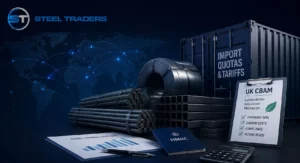
From 1 July 2026, new UK steel trade measures will come into effect, reducing tariff-free steel import quotas and increasing tariffs on certain imported steel products once quota thresholds have been reached. The changes form part of the Government’s wider strategy to support domestic steel production and protect the UK steel industry from global oversupply.
For steel buyers, manufacturers, fabricators and contractors, these changes could influence steel pricing, stock availability and delivery lead times throughout the remainder of 2026 and beyond.
In this article, we look at what is changing and what businesses should consider when planning future steel purchases.
What Is Changing?
The new measures replace the existing UK steel safeguard regime that expires at the end of June 2026.
Under the new framework:
- Tariff-free steel import quotas will be reduced by approximately 60%.
- Steel imports exceeding quota limits may be subject to a 50% tariff.
- The measures will apply across multiple categories of steel products that can also be manufactured within the UK.
- The system will operate through quarterly tariff-rate quotas administered on a first-come, first-served basis.
The intention is to strengthen UK steel production and reduce the impact of low-cost imports entering the market. However, the changes are expected to create both opportunities and challenges across the wider steel supply chain.
Potential Impact on Steel Prices
One of the most immediate concerns for buyers is pricing.
With lower volumes of tariff-free imported steel available, importers may face higher costs once quotas are exhausted. Those increased costs can ultimately filter through the supply chain and affect end users.
Several factors could contribute to upward price pressure:
- Reduced availability of imported material.
- Increased demand for UK-produced steel.
- Additional tariff costs on out-of-quota imports.
- Greater competition for available stock.
While pricing will continue to be influenced by global steel production, energy costs and international demand, many industry observers expect buyers to place greater emphasis on securing supply rather than simply obtaining the lowest price.
Could Steel Availability Become More Challenging?
Availability is likely to become a key consideration throughout the second half of 2026.
Some imported steel products may reach quota limits more quickly than others, particularly those sourced from regions that have historically supplied large volumes into the UK market. Once quotas are reached, the additional tariff burden could reduce import volumes and limit available stock.
For businesses operating on tight project schedules, this could result in:
- Reduced product choice.
- Greater competition for specific grades and sizes.
- Increased pressure on stockholding.
- Longer procurement cycles.
The impact is expected to vary by product category, with some sectors potentially benefiting from transitional arrangements and future exemptions where domestic alternatives are limited.
What About Lead Times?
Lead times are often one of the first indicators of supply chain pressure.
As buyers adjust their purchasing strategies and suppliers adapt to the new quota system, some fluctuations in lead times should be expected.
Potential challenges may include:
- Increased demand for immediately available stock.
- Longer lead times for imported material.
- Greater forecasting requirements from suppliers.
- More strategic purchasing decisions by manufacturers and fabricators.
Businesses that rely on steel as a critical component of production may find it beneficial to review procurement schedules earlier than usual and engage with suppliers well in advance of project deadlines.
What Should Steel Buyers Do Now?
While the full market impact will only become clear once the new measures are fully operational, proactive planning can help reduce risk.
Consider:
Review Forward Demand
Understand upcoming project requirements and identify any critical steel products that may be vulnerable to supply disruption.
Speak to Your Supplier Early
Open communication with your steel supplier can help identify potential availability issues before they become problems.
Consider Stock Strategies
For regularly used products, reviewing stockholding levels may help minimise disruption.
Monitor Market Conditions
The Government has indicated that the measures will be reviewed after implementation, meaning further adjustments could follow as market conditions evolve.
How Steel Traders Can Help
At Steel Traders, we understand that changing market conditions can create uncertainty for buyers.
Our role is to help customers navigate these challenges through reliable sourcing, market insight and access to a broad range of steel products including:
- Gas & Water Tubes
- Tubes & Hollows
- API Range | Seamless & Welded
- Merchant Bars
- Engineering Bars
Whether you require a single order or ongoing supply support, our team works closely with customers to identify the right products, secure availability and minimise supply chain risk.
As the steel market adapts to the UK’s new import measures, having a trusted supply partner becomes more important than ever.
Speak to Steel Traders
If you would like to discuss current steel availability, upcoming project requirements or sourcing options, contact the Steel Traders team today.