The UK steel import market has entered a significant new phase.
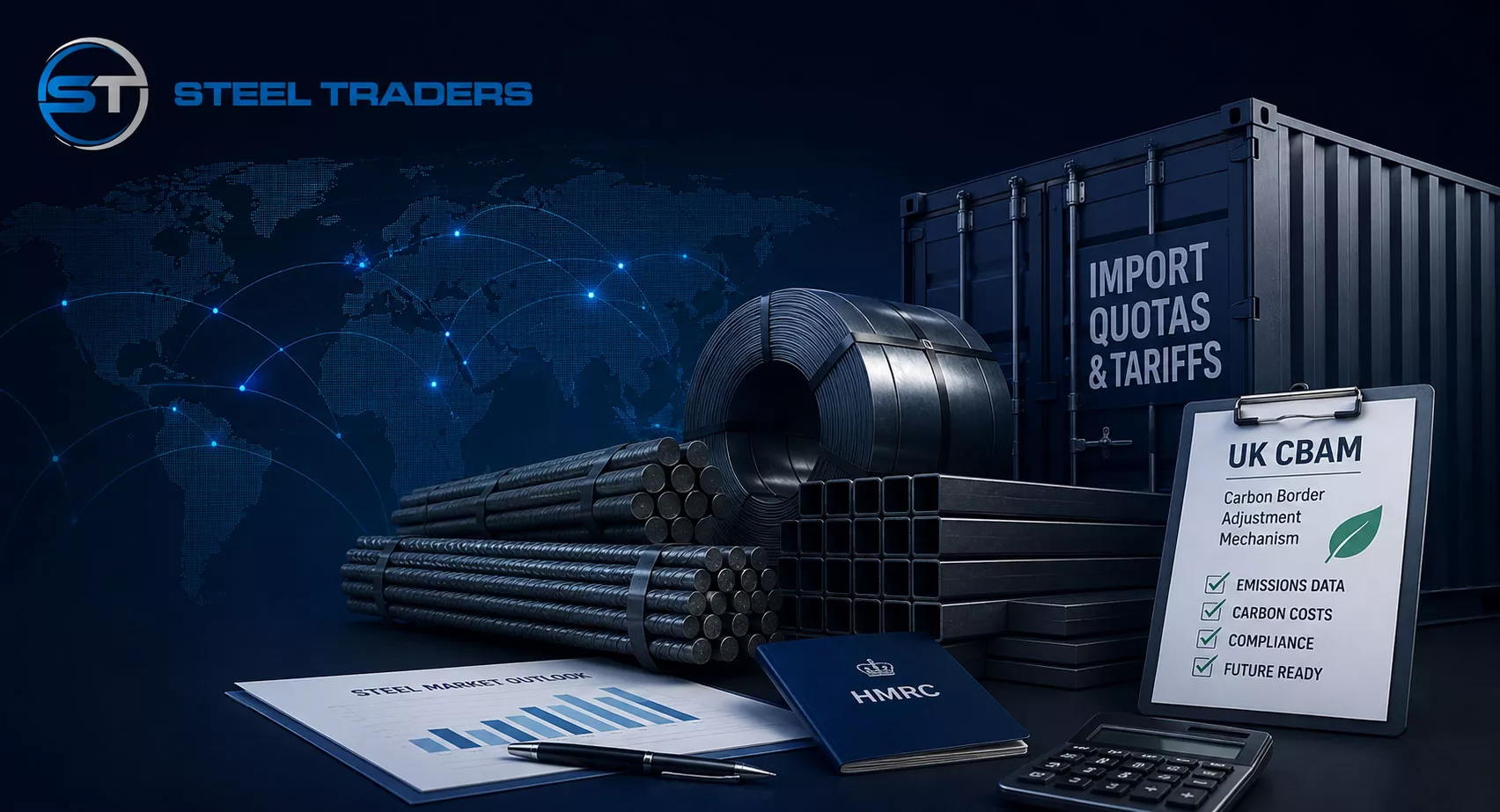
On 1 July 2026, the UK Government introduced a new steel trade measure limiting the volume of specified steel products that can enter the country tariff-free. Imports above the relevant quota are now subject to a 50% out-of-quota tariff.
The measure replaced the previous UK steel safeguard, which expired on 30 June 2026, and is already influencing purchasing decisions, stock levels and steel import strategies across the market.
At Steel Traders Midlands, we believe these changes mark the beginning of a more complex period for UK steel buyers. Price and availability will remain important, but quota utilisation, country of origin, customs treatment and carbon emissions will increasingly affect the true landed cost of imported steel.
Have the New UK Steel Import Quotas Affected Trade?
The simple answer is yes.
Many steel importers anticipated the changes several months in advance and increased their stock levels before the new quota system came into effect.
From our discussions with customers, mills and international suppliers, we are seeing clear evidence that some buyers brought purchasing decisions forward ahead of the July changes. This has left parts of the UK market relatively well stocked despite the significant change in tariff exposure.
As a result, demand during the traditional summer holiday period, covering July, August and into September, is expected to remain relatively subdued.
This softer demand should not necessarily be interpreted as underlying weakness in the steel market. Instead, it reflects careful planning by buyers and importers seeking to reduce their exposure to quota restrictions and additional import costs.
In effect, some businesses have brought future purchasing forward. This has created stronger stock availability in the short term but may also result in uneven buying patterns later in the year as existing inventories are used.
Have Any UK Steel Import Quotas Already Been Exhausted?
Some quota lines have already been filled or are close to capacity, while quota remains available in certain other product categories.
The position can vary considerably according to the steel product, commodity code and country of origin. Quotas are administered by HMRC on a first-come, first-served basis, meaning availability can change as new claims are submitted and processed.
At Steel Traders Midlands, we are monitoring quota utilisation across the product groups and origins relevant to our customers. Buyers should avoid making purchasing decisions based on quota information that may be several days or weeks old, particularly where goods have long production or shipping lead times.
There are several possible reasons why quota remains available in some areas of the market.
Some buyers may have deliberately reduced purchasing volumes while waiting for greater clarity. Differences in shipping schedules, customs declarations and clearance dates may also affect when quota is used.
Our view is that some businesses are currently taking a more cautious approach. Rather than committing to large volumes, they may be purchasing selectively while assessing whether additional tariff costs can be absorbed, passed on or avoided through alternative sources of supply.
The transitional exemption introduced alongside the new trade measure is another important factor.
Qualifying steel ordered under contracts entered into before 14 March 2026 can be exempt from the 50% out-of-quota tariff when imported into the UK between 1 July and 30 September 2026. Qualifying goods released from a customs warehouse during that period may also benefit from the exemption.
Steel imported under this transitional arrangement does not count towards the quota allocation for the first quarter of the new measure. Consequently, a considerable volume of material may continue entering the UK under existing contractual arrangements without immediately using the available quota.
This may temporarily ease supply pressure, but businesses should not assume that the same conditions will continue once the transitional period ends.
The Next Major Change: UK CBAM
Although steel quotas and tariffs are currently dominating industry discussions, attention is increasingly turning towards the UK Carbon Border Adjustment Mechanism, commonly known as UK CBAM.
UK CBAM is scheduled to come into effect on 1 January 2027 and will apply to specified imported goods from sectors including iron and steel, aluminium, cement, fertiliser and hydrogen.
It represents one of the most significant structural changes to steel imports in recent decades.
In broad terms, UK CBAM will place a carbon price on the emissions embodied in specified goods imported into the UK. For steel importers, this means the carbon intensity of the manufacturing process will become an increasingly important part of product selection, procurement and landed-cost calculations.
At Steel Traders Midlands, our view is that CBAM preparation should now form part of every importer’s purchasing strategy.
Buyers will increasingly need to assess not only the price and technical specification of the steel, but also:
- The producer’s manufacturing methods
- The carbon intensity of production
- The country of origin
- The availability of verified emissions information
- The reliability of the supporting documentation
- Any carbon price already paid in the country of production
Not every iron or steel product will automatically fall within the scope of CBAM. Liability will depend on the relevant commodity code and the circumstances of the import. Importers will therefore need to establish which products are covered and who is legally considered to be the importer.
How Will CBAM Costs Be Calculated?
The CBAM charge will be based on the direct emissions embodied within the imported goods.
Importers will be able to use independently verified emissions data supplied through the manufacturing chain or government-set default emissions values. The weight of the goods and their emissions intensity will form part of the calculation.
Where an eligible carbon price has already been paid in the country of production, carbon price relief may be available, subject to the required evidence and verification.
This means steel produced through modern, lower-emission manufacturing processes should generally carry a lower carbon exposure than comparable steel produced through more carbon-intensive methods.
However, the final liability will depend on the detailed UK CBAM calculation rules, the quality of the emissions information and any applicable relief.
We believe this will create a meaningful difference between suppliers that can provide dependable, verified emissions data and those that cannot. In some cases, a product with a lower initial mill price may ultimately become more expensive once carbon costs, tariffs, shipping and customs charges are taken into account.
The cheapest steel at the point of production will not necessarily represent the lowest delivered cost to the buyer.
What Should UK Steel Buyers and Importers Do Now?
Businesses should not wait until January 2027 to begin preparing.
The first step is to review the commodity codes used for imported steel products and establish which goods are likely to fall within the scope of UK CBAM.
Importers should also begin discussing emissions information with mills, manufacturers and overseas suppliers. The quality and availability of this information will become increasingly important.
Businesses intending to use actual emissions figures will need evidence that the information has been properly verified. Where verified information is unavailable, government default emissions values may have to be used.
Importers should also consider whether the value of their CBAM goods could reach the £50,000 registration threshold and ensure that the appropriate import records are maintained from 1 January 2027.
At Steel Traders Midlands, we recommend that buyers begin reviewing their supply chains across several areas:
- Product price and availability
- Current quota utilisation
- Potential out-of-quota tariffs
- Country of origin
- Shipping and logistics costs
- Customs arrangements
- Carbon intensity
- Verified emissions reporting
- Any applicable carbon pricing relief
- Alternative mills and sources of supply
We also believe that supply-chain flexibility will become increasingly valuable.
Businesses that depend heavily on one mill, one country or one purchasing route may find themselves more exposed to quota restrictions, carbon costs and changes in documentation requirements. Access to a broader international supplier network can provide more options when market conditions change.
A Positive Development for the Steel Industry
Although UK CBAM will inevitably create additional costs and administrative responsibilities for some importers, it could ultimately benefit both the steel industry and responsible buyers.
The mechanism is intended to reduce carbon leakage by ensuring that specified carbon-intensive imports face a carbon price comparable to that paid by UK manufacturers.
It should also encourage greater transparency throughout international steel supply chains. Mills that invest in cleaner manufacturing, improved efficiency and reliable emissions reporting will be better positioned to supply customers in the UK.
Steel Traders Midlands sees this as a potentially positive development for high-quality and environmentally responsible producers.
The strongest suppliers are likely to be those that can combine competitive pricing with dependable production, transparent emissions information, accurate documentation and reliable international logistics.
Over time, environmental performance and traceability are likely to become increasingly important elements of steel sourcing alongside price, specification, availability and delivery.
What Could Happen to Steel Demand During the Rest of 2026?
Based on our current conversations across the market, Steel Traders Midlands expects demand to strengthen gradually as businesses prepare for the introduction of UK CBAM.
Some buyers may bring forward orders before January 2027, particularly where they are uncertain about the carbon exposure of specific products or suppliers.
Others may review their preferred mills, countries of origin or product specifications before committing to future purchases.
The market may therefore experience periods of stronger activity towards the end of the year as businesses seek to secure stock, confirm emissions data and understand how CBAM could affect their purchasing costs.
However, the position will not be identical for every product or buyer. Decisions will depend on stockholding, cash flow, quota availability, shipping schedules, product demand and the ability of suppliers to provide reliable carbon information.
Looking Ahead
The UK steel market has entered a new era.
Import quotas, out-of-quota tariffs and carbon adjustment mechanisms are no longer future considerations. They are becoming part of today’s commercial reality.
We will continue to monitor:
- UK steel quota utilisation
- Out-of-quota tariff exposure
- International steel prices
- Global supply-chain developments
- Shipping and customs arrangements
- Changes to UK CBAM legislation
- Emissions reporting requirements
- The availability of lower-carbon steel
Through our global sourcing network, commercial financing and complete logistics management, we will ensure customers consider the full cost and commercial implications of their steel purchases.
Our role is not simply to locate steel at a competitive mill price. It is to help customers identify dependable sources of supply, manage international purchasing risks and make informed decisions in an increasingly complex global market.
To discuss your current or future steel requirements, or the potential effect of quotas, tariffs and UK CBAM on your purchasing strategy, contact the Steel Traders Midlands team.
Frequently Asked Questions
What is the UK tariff on steel imported outside the quota?
From 1 July 2026, specified steel imports exceeding the relevant tariff-free quota are subject to a 50% out-of-quota tariff. The exact treatment depends on the product, commodity code and country of origin.
When does UK CBAM start?
UK CBAM is scheduled to come into effect on 1 January 2027. It will apply to specified imported goods in sectors including iron and steel.
Does UK CBAM apply to every imported steel product?
No. UK CBAM applies to specified goods identified by their commodity codes. Importers should check each product against the current HMRC guidance.
How can Steel Traders Midlands help businesses prepare?
Steel Traders Midlands can help customers assess alternative international sources of supply, consider quota and tariff exposure, coordinate logistics and understand the wider commercial factors affecting the delivered cost of imported steel.
This article provides general market information and reflects Steel Traders Midlands’ current observations and opinions. It should not be treated as customs, tax or legal advice. Importers should check applicable commodity codes, current quota balances.